
Published February 23, 2026
The "As-Is" Reality Check: What Selling Your Denver Home Without Repairs Actually Costs You


Let's be honest, you've probably thought about it. That leaky basement, the dated kitchen, the HVAC system that's been making weird noises for two years. The thought of dealing with contractors, spending money you don't have, and managing repairs while trying to sell sounds exhausting.
So you Google "sell my Denver home as-is" and suddenly it feels like the perfect solution. List it, let someone else deal with the problems, and move on with your life.
I get it. But here's what most homeowners don't realize until it's too late: selling "as-is" in Denver's 2026 market often costs you way more than those repairs ever would.
What "As-Is" Really Signals to Today's Buyers
Here's the uncomfortable truth: when buyers in Centennial, Aurora, or anywhere in the Denver metro see an "as-is" listing, their first thought isn't "great deal." It's "what are they hiding?"
In 2021, during the buying frenzy, buyers were waiving inspections and competing for anything with four walls and a roof. That version of the market is gone. Today's buyers are more selective, more cautious, and they have time to walk away from anything that feels risky.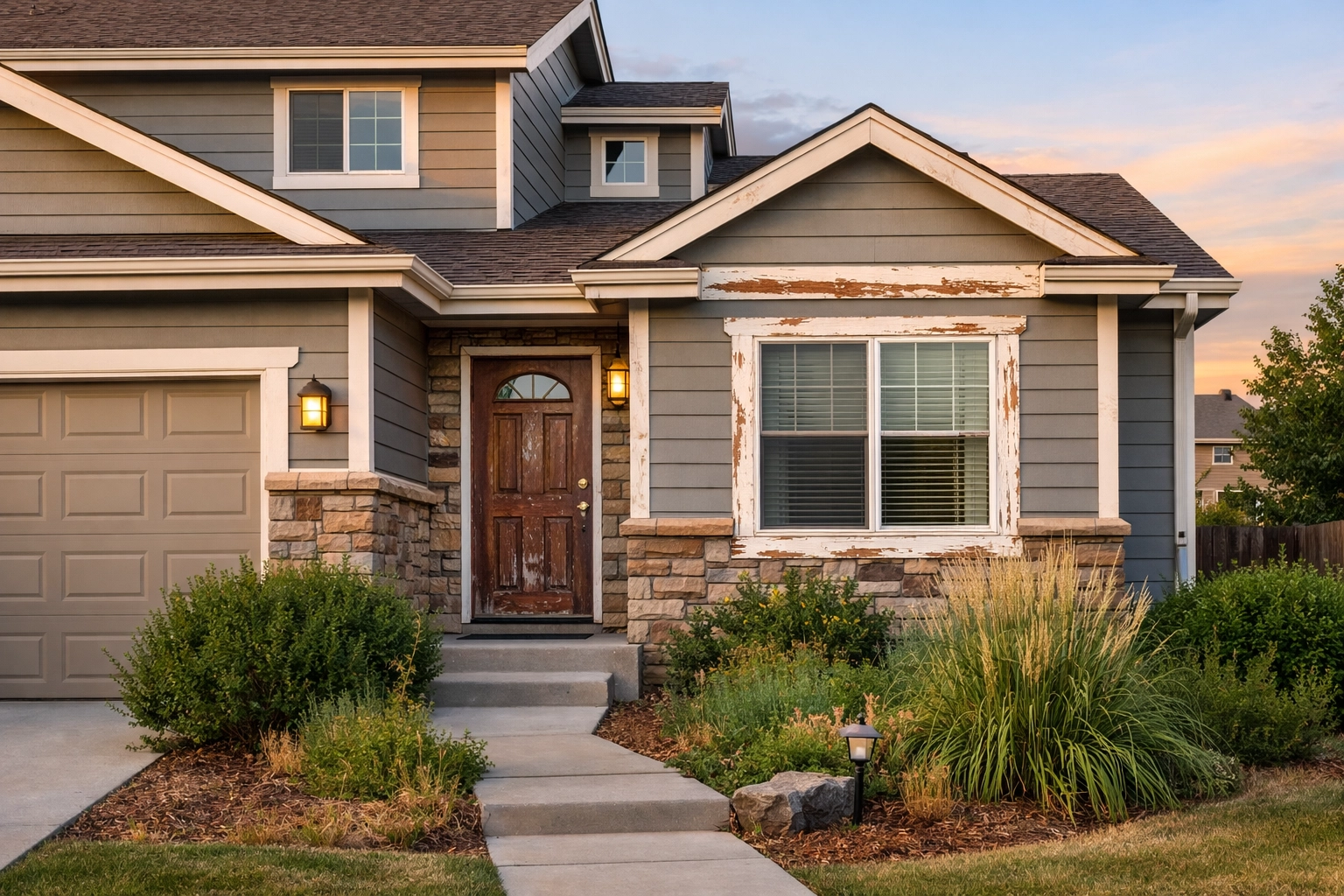
An "as-is" listing immediately puts buyers on the defensive. Even if your home only needs cosmetic updates, that label suggests foundation issues, water damage, or expensive systems on their last leg. And when buyers assume the worst, they price their offers accordingly.
The Math That Might Shock You
Let's talk real numbers. Research shows that as-is home sales in Denver typically come with a 30-50% discount below fair market value. If your home would sell for $500,000 after some strategic updates, you're potentially looking at offers between $250,000 and $350,000.
Think about that for a second. Even if your home legitimately needs $40,000 in repairs, you're potentially leaving $110,000-$210,000 on the table by listing as-is.
Cash buyers, who are often the only ones interested in as-is properties, typically offer between 30-70% of your home's after-repair value. They're not being mean; they're running a business. They need to account for renovation costs, holding costs, financing, and their profit margin.
Here's a real-world scenario:
- Your home's current value: $450,000
- Needed repairs: $25,000 (new roof, updated bathrooms, fresh paint)
- Potential as-is cash offer: $270,000-$315,000
- Net loss vs. making repairs: $110,000-$155,000
That's a pretty expensive convenience.
Why the Balanced Market Changes Everything
In 2021, you could've listed a home with avocado-green appliances and harvest-gold carpet, and you'd still get multiple offers over asking. Buyers weren't just overlooking issues, they were competing for the privilege of fixing them.
That market is long gone. In Denver's current balanced market, homes are sitting for an average of 56 days. Buyers have options. They're doing inspections. They're comparing properties. And they're absolutely choosing the move-in ready home over the fixer-upper when prices are similar.
Here's what I've seen in the past six months: well-maintained homes in Aurora and Centennial are still selling close to asking price, while comparable homes with obvious deferred maintenance are sitting or selling for significantly less. The gap between "needs work" and "move-in ready" has never been wider.
The ROI of Strategic Repairs
Not all repairs are created equal. You don't need to gut-renovate your kitchen or add a master suite to compete. What you need is a strategic approach that addresses the issues buyers actually care about.
High-ROI repairs that typically pay for themselves (and then some):
- Fresh paint throughout: Costs $3,000-$5,000, returns 2-3x
- New carpet or refinished floors: Costs $5,000-$8,000, completely changes buyer perception
- Kitchen and bathroom updates: Even budget-friendly refreshes (new hardware, updated lighting, refinished cabinets) make a massive difference
- Fixing obvious deferred maintenance: Leaky faucets, broken fixtures, cracked tiles, small stuff that screams "neglected"
- Curb appeal basics: Landscaping, front door refresh, exterior paint touch-ups
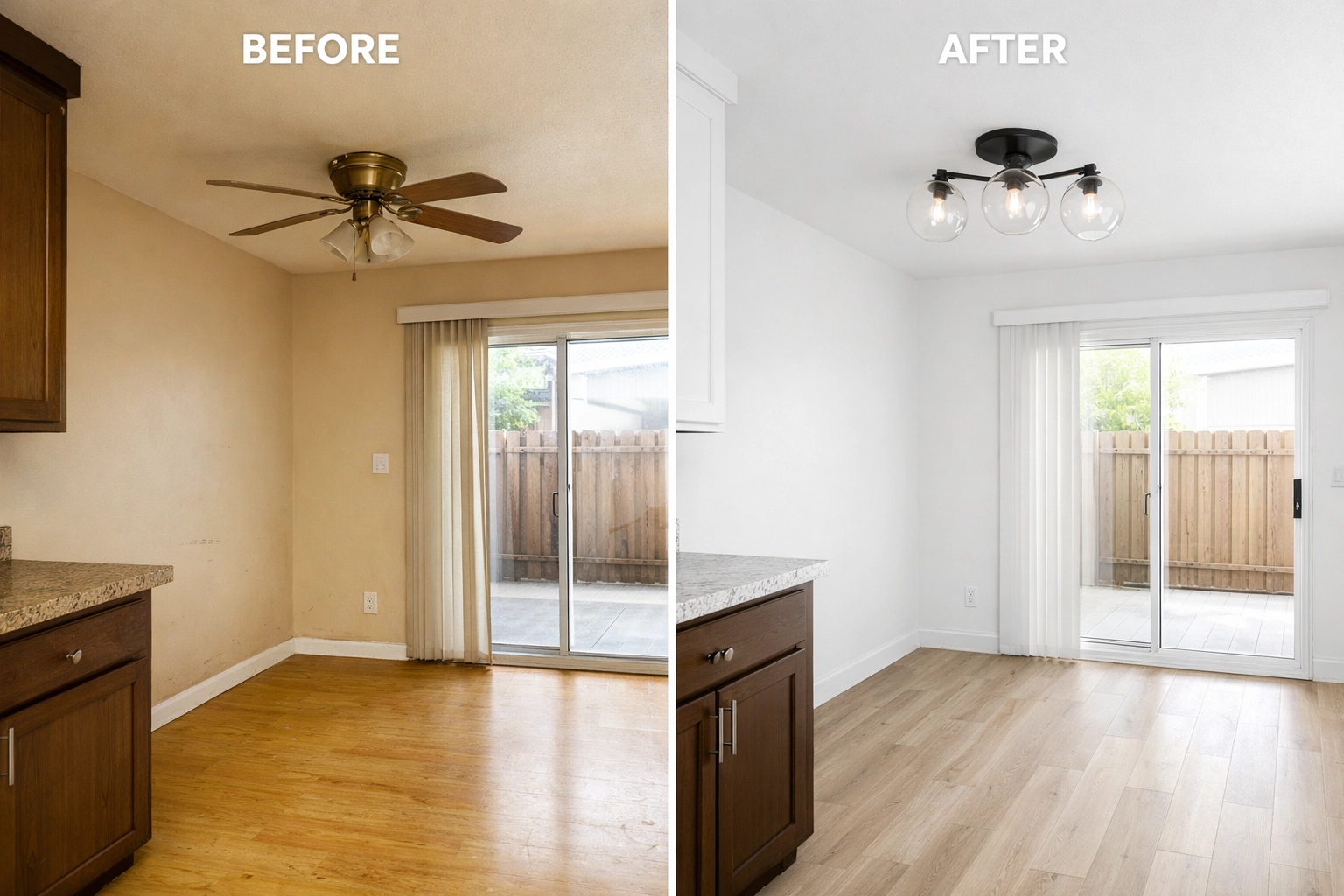
I recently worked with a couple in Centennial who were ready to list as-is because they were overwhelmed. Their home needed about $18,000 in updates, nothing structural, just cosmetic stuff and some deferred maintenance. They were getting as-is offers around $380,000.
After a real conversation about the numbers, they decided to invest in the repairs. Two months later, their home sold for $465,000. After repair costs, they netted an additional $67,000. That's $67,000 that would've gone straight into an investor's pocket instead of funding their next chapter.
When As-Is Actually Makes Sense
Look, I'm not here to tell you that as-is sales are always a bad idea. Sometimes they're the right call. Here's when:
Major structural issues: If you've got foundation problems, extensive water damage, or other five-figure repairs, the math might actually work in your favor to sell as-is. Especially if you don't have the cash to front those repairs.
Inherited properties: If you've inherited a home from a distance and don't want to manage a renovation remotely, an as-is sale can make sense for peace of mind.
Extreme time pressure: If you're facing foreclosure, need to relocate immediately for work, or have another legitimate time crunch, the convenience of an as-is cash sale might be worth the discount.
You've honestly run the numbers: If you've gotten actual contractor bids, calculated the real costs, and compared them to the likely price difference between as-is and fixed-up, and as-is still makes sense? Then do it with your eyes open.
The key is making an informed decision, not just taking the path of least resistance because you're tired or overwhelmed.
The Hidden Costs of "Convenience"
Beyond the obvious price discount, there are other costs to consider:
Limited buyer pool: You're essentially marketing only to investors and cash buyers. That's maybe 5-10% of the market instead of 100%.
Longer time on market: Even though you're avoiding repairs, as-is homes often sit longer because fewer buyers are interested.
Negotiation leverage: When you've only got one or two interested parties (both investors), you've lost all negotiating power.
Transfer taxes: Denver requires 1 cent per $100 of sale price in transfer taxes, and on a lower sale price, you still pay, but you're also walking away from potential equity.
How to Make the Right Decision
Here's my approach with every client considering an as-is sale:
- Get a pre-listing inspection: Know exactly what you're dealing with. Guessing helps no one.
- Get actual contractor bids: Not estimates from the internet. Real numbers from real contractors.
- Talk to a local agent (hi, that's me): Get a comparative market analysis showing what your home could sell for as-is versus repaired.
- Run the actual math: Subtract repair costs from potential sale price. Compare to as-is offers. The answer is usually pretty clear.
- Consider your timeline and stress tolerance: Sometimes peace of mind is worth something. Just know what that something costs.
The Bottom Line
Selling your Denver home as-is isn't inherently wrong: but it's expensive. In most cases, far more expensive than making strategic repairs.
The 2026 market doesn't have patience for deferred maintenance the way 2021 did. Buyers have choices, and they're choosing updated, well-maintained homes over projects. If you list as-is, you're essentially paying someone else to see the potential in your home: and that payment comes in the form of a massive discount.
My job isn't to pressure you into repairs you can't afford or don't want to make. It's to make sure you understand what each option actually costs, so you can make the decision that's right for your situation.
Sometimes that's investing $20,000 to net an extra $80,000. Sometimes it's taking a lower as-is offer because your circumstances demand it. But it should always be a choice you make with full information, not one you stumble into because selling felt overwhelming.
If you're thinking about selling your home in Denver, Centennial, or Aurora: whether as-is or fixed up: let's have an honest conversation about your options. No pressure, no sales pitch. Just real numbers and real talk about what makes sense for your situation.
Because here's the thing: I've seen too many sellers leave tens of thousands of dollars on the table because they didn't realize they had a choice. Don't be one of them.


